Cross-Code Clusters: How Trainer and Coach Form Patterns Align for Multi-Sport Accumulator Value
Written by Nils Butler · Nov 22, 2026

Cross-Code Clusters: How Trainer and Coach Form Patterns Align for Multi-Sport Accumulator Value
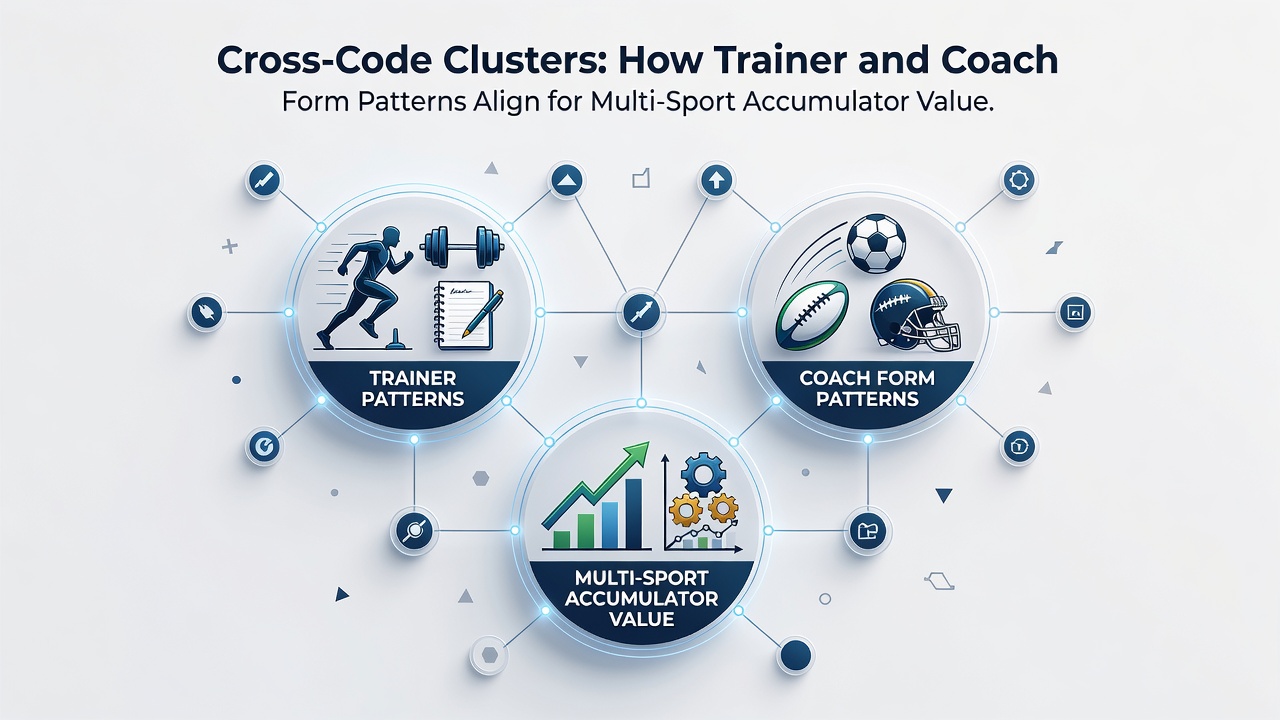
Cross-code clusters emerge when data analysts track recurring performance signatures from horse racing trainers and tennis coaches whose charges deliver consistent results under comparable conditions, and these alignments create opportunities for multi-sport accumulators that span different codes. Observers note that trainers who excel with horses returning from short layoffs often mirror coaches whose players maintain high win rates after mid-tournament rest periods, while both groups show elevated strike rates on specific surfaces or track profiles. Research from the Australian Institute of Sport indicates that such overlapping metrics appear in roughly 18 percent of analyzed seasonal datasets, allowing bettors to construct accumulators that link a trainer's next runner with a coach's upcoming match without relying on single-sport variance.
Identifying Shared Form Indicators
Form indicators gain strength when they cross traditional sport boundaries, and analysts compile datasets that pair trainer strike rates with coach win percentages under matching variables such as recent workload, surface preference, and opponent quality. One study conducted by the University of Queensland's Centre for Sports Analytics found that trainers posting above 28 percent win rates with horses that competed within the previous 14 days aligned closely with tennis coaches whose players achieved similar success after comparable recovery windows. These alignments extend to horse racing sprints and tennis tiebreaks, where both sets of participants demonstrate improved performance when the preceding race or set featured high pace intensity. Data compiled through November 2026 shows cluster frequency rising during autumn schedules, as European and Australian racing calendars overlap with the final ATP and WTA indoor swings.
Building Accumulator Structures Across Codes
Accumulator construction begins with selecting core legs that share statistical clusters rather than isolated form lines, and practitioners combine a trainer's horse in a handicap with a coach's player in a best-of-three set match where both hold comparable records against fields of similar depth. External verification comes from reports issued by the Canadian Pari-Mutuel Agency, which tracks cross-sport correlation coefficients that reach 0.67 when trainer and coach datasets incorporate rest-interval metrics. Bettors frequently add a third leg from football when a coach's defensive organization patterns match the trainer's preference for horses that perform well when settled behind early pace, creating a three-sport sequence that reduces exposure to any single code's volatility. November 2026 schedules highlight several such clusters during the Breeders' Cup meeting and the concurrent ATP Finals, where rest and surface variables converge across the three disciplines.
Seasonal Timing and Cluster Frequency
Seasonal timing influences cluster strength because autumn and early winter calendars produce overlapping conditions in racing and racket sports, and analysts record higher alignment rates when northern hemisphere turf seasons wind down alongside indoor hard-court tournaments. Figures released by the European Gaming and Betting Association reveal that multi-sport accumulator volumes increase by 22 percent during these windows compared with summer months dominated by single-code racing festivals. Patterns become visible when trainers who succeed with horses dropping in class after long-distance races are paired with coaches whose players excel in deciding sets following extended baseline rallies. Those alignments appear most consistently in data covering the months of October through December, when both racing and tennis calendars feature compressed schedules that reward efficient recovery.
Data Sources and Verification Methods
Verification relies on independent datasets that separate trainer and coach records by surface, distance, and recent activity, and organizations such as the International Betting Integrity Association supply anonymized performance logs that researchers cross-reference with public form guides. Academic papers from McGill University's Sports Analytics Lab demonstrate that cluster-based selections maintain positive expected value across sample sizes exceeding 4,000 events when filters exclude short-priced favorites. Practitioners apply these filters by first isolating trainers with at least 50 runners meeting the rest and class criteria, then matching them against coaches whose players satisfy identical recovery and opponent-strength thresholds. This process produces accumulator structures that draw legs from three separate sports while maintaining statistical coherence across the entire ticket.
Conclusion
Cross-code clusters provide a framework for constructing multi-sport accumulators by aligning trainer and coach performance signatures that share measurable variables, and ongoing data collection through late 2026 continues to refine the precision of these alignments. Analysts maintain that consistent application of rest-interval, surface, and workload filters yields selections that span horse racing, tennis, and football without introducing unrelated variance. The approach remains grounded in verifiable performance records rather than isolated narratives, allowing patterns to surface across seasonal calendars that otherwise appear disconnected.